Frequently Asked Questions
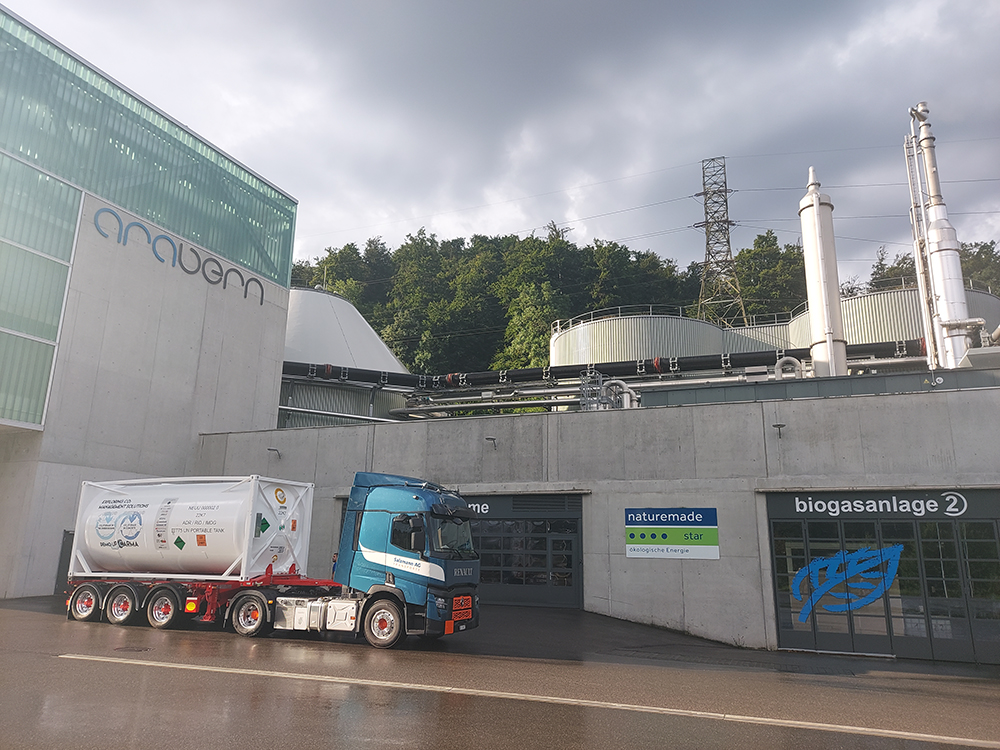
For both pilots (see Q3), the biogenic CO2 will be captured at the wastewater treatment plant ARA Bern, where biogas is generated and upgraded to bio-methane. The CO2 is thereby separated and released in the atmosphere. By capturing and storing this CO2 as in DemoUpCARMA, negative emissions are generated.
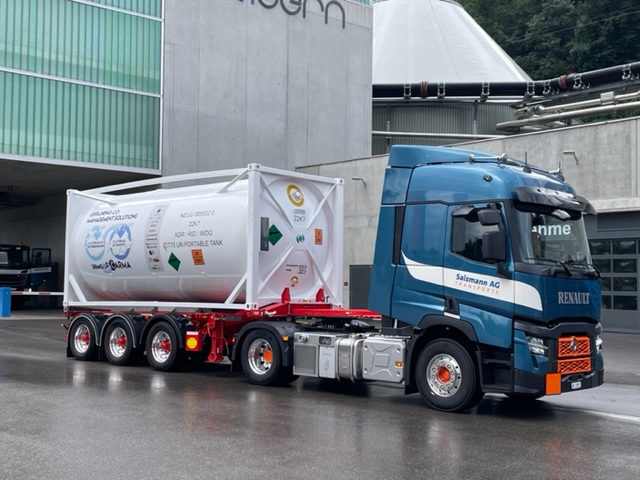
After capturing CO2 at the waste-water treatment plant ARA Bern, the CO2 is liquefied and loaded onto portable vacuum-insulated ISOtainers, which can keep the CO2 in a liquid state until the delivery point (i.e., storage site). The ISOtainers are transported via truck from the capture site to the train station in Weil am Rhein (ca. 100 km). From there, the ISOtainers are transported first via rail to Rotterdam (ca. 800 km) and then via ship to Reykjavik (ca. 2200 km). Once delivered in Reykjavik, the ISOtainers are transferred to the injection site via truck.
An ISO tank container or ISOtainer is designed for transporting non-hazardous and hazardous liquids worldwide via truck, ship, or rail in a safe way. The abbreviation ISO stands for “International Organization for Standardization”.